
What Are The Mining Industry Trends In South Africa?
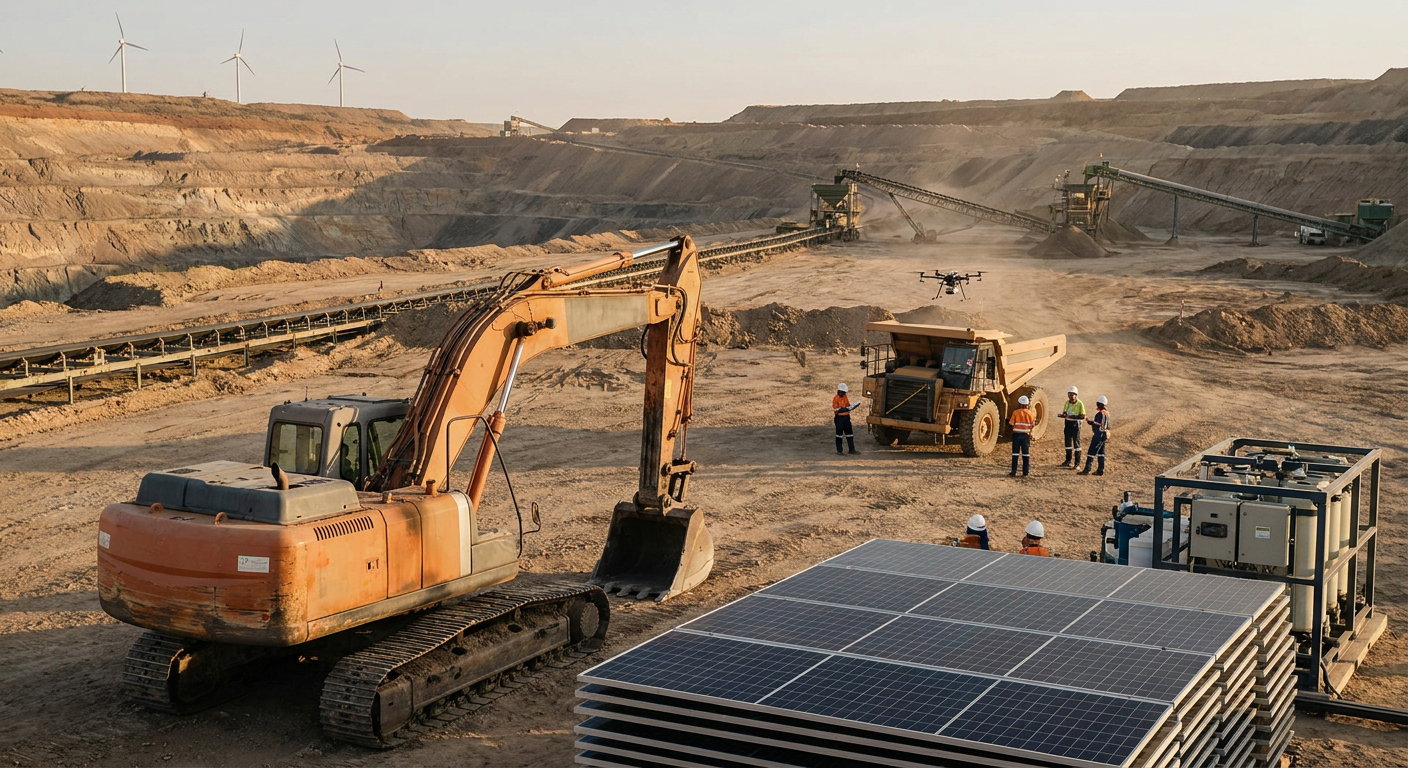
Current trends in South Africa’s mining industry are defined by a dual push towards technological adoption and stringent ESG compliance. Digitalisation, including AI and automation, is being implemented to improve efficiency and safety in response to rising operational costs and complex ore bodies. Simultaneously, environmental, social, and governance (ESG) factors are now fundamental determinants for investment, compelling operators to integrate sustainable practices. The global energy transition is also creating significant demand for minerals like PGMs, lithium, and manganese, shifting focus towards these resources.
The Strategic Imperative: Technology and Sustainability
The South African mining sector is navigating deep structural changes driven by global economic pressures and local operational realities. Persistently high energy costs, logistical bottlenecks, and regulatory uncertainty are forcing a re-evaluation of traditional mining models. This has accelerated the adoption of Fourth Industrial Revolution (4IR) technologies as a primary strategy for survival and future competitiveness.
Key technological drivers reshaping operations include:
- Artificial Intelligence (AI) and Machine Learning for predictive maintenance and optimised mineral processing.
- Automation of vehicles and drilling equipment to enhance worker safety in hazardous deep-level environments.
- Internet of Things (IoT) sensors and data analytics to provide real-time operational oversight and improve efficiencies.
These innovations are critical for extending the life of mines and improving productivity in a sector hampered by rising costs and declining commodity prices for certain metals.
Technical Deep-Dive: Digital Transformation and Automation
Digitalisation is no longer an optional upgrade; it is a core operational requirement. The use of advanced technologies is fundamentally altering every stage of the mining value chain, from exploration to distribution. This shift is a direct response to the need to reduce costs, improve safety, and increase mineral recovery rates.
The Mechanics of a Smart Mine
A ‘smart mine’ integrates digital tools to create a safer and more productive environment. AI-driven systems, for example, can analyse geological data to identify high-yield areas more accurately or monitor equipment to predict failures before they occur, cutting downtime by up to 50%. Similarly, automated loaders and haul trucks, supervised from surface control rooms, can operate continuously in deep or unstable sections of a mine, removing human operators from harm’s way.
Technical Deep-Dive: ESG and The Energy
TransitionEnvironmental, Social, and Governance (ESG) criteria have moved from a reputational concern to a core compliance issue that directly impacts a mine’s access to capital. Investors and regulators now demand verifiable data on a company’s performance related to climate impact, water usage, and community relations. This has made ESG readiness a primary determinant of a project’s long-term viability.
Critical ESG focus areas for South African mines include:
- Decarbonisation through renewable energy sources and fuel-efficient technologies like hydrogen-powered haul trucks.
- Water stewardship, involving advanced conservation and recycling systems to minimise the environmental footprint.
- Social and Labour Plans (SLPs), which mandate community development and local procurement to ensure the economic benefits of mining are shared.
The global shift to clean energy technologies has also intensified the focus on South Africa’s reserves of ‘green’ minerals. The country holds significant deposits of PGMs, manganese, lithium, and other materials essential for batteries, fuel cells, and renewable energy infrastructure.
Precision Solutions with RP Mining Solutions
Navigating the pressures of digitalisation and ESG compliance requires specialised technical support. RP Mining Solutions provides robust systems and expert guidance to help your operation enhance efficiency, meet regulatory requirements, and improve safety. We deliver the practical tools needed to modernise your processes effectively. Get a quote today by clicking the button below to ensure your project is positioned for stability and success.
FAQs
What are the biggest challenges facing the SA mining industry?
The primary challenges include persistent power outages (load-shedding), logistical constraints with rail and ports, regulatory uncertainty, and rising electricity tariffs which impact operational costs and global competitiveness.
How is technology changing mining jobs in South Africa?
Technology is shifting the required skillset from physical labour to digital literacy. While automation of certain tasks raises concerns about job displacement, it also creates new roles in systems operation, data analysis, and remote equipment supervision, while improving safety for all workers.
What are ‘green minerals’ and why are they important for South Africa?
‘Green minerals’ are raw materials like platinum group metals (PGMs), lithium, manganese, and cobalt, which are essential for clean energy technologies such as electric vehicle batteries and hydrogen fuel cells. South Africa’s large reserves of these minerals position it as a key supplier for the global energy transition.
What does ESG mean in the context of mining?
ESG stands for Environmental, Social, and Governance. In mining, it refers to a framework that investors and regulators use to assess a company’s performance on sustainability and ethical practices. This includes managing its carbon footprint, ensuring water security, maintaining a social license to operate through community engagement, and transparent corporate governance.
key supplier