
What Is Coal Washing And Why Is It Important For Industrial Use
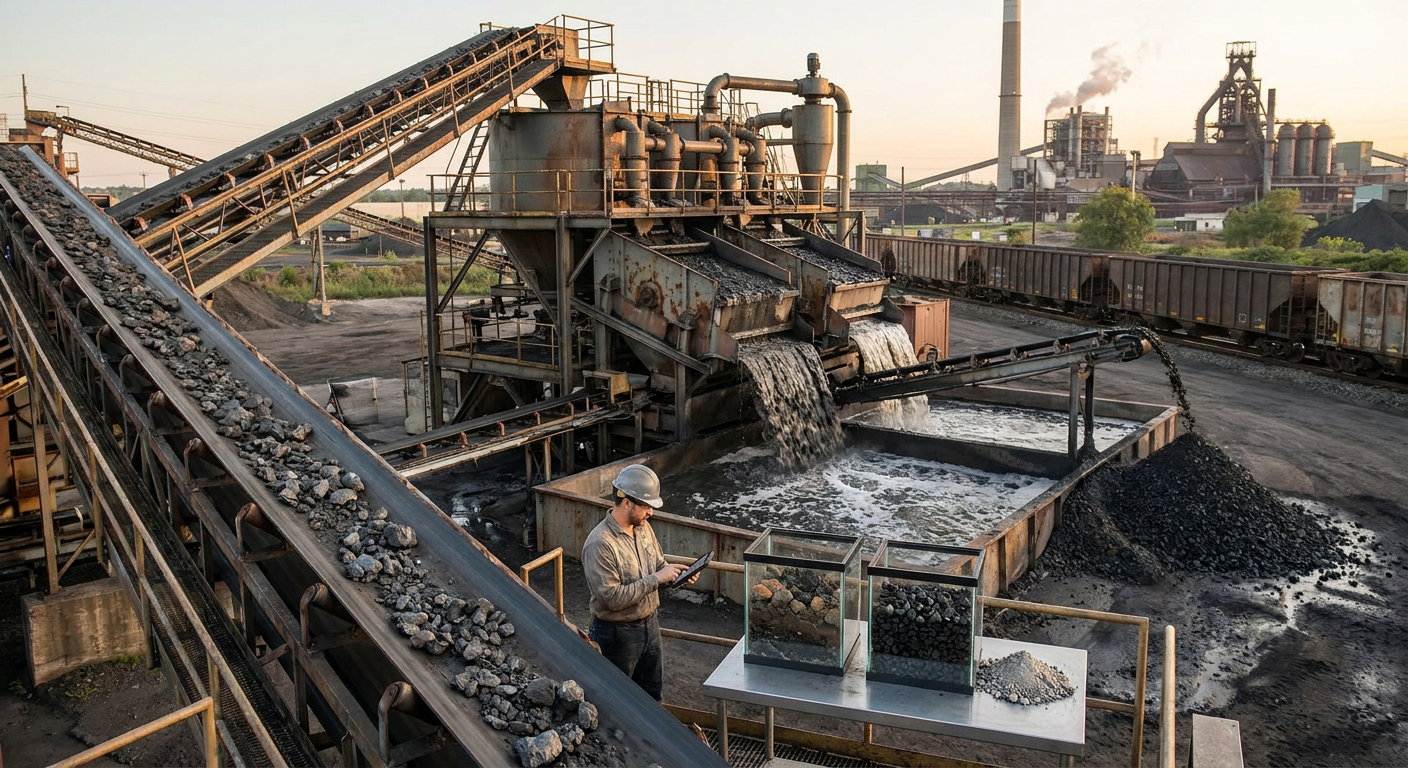
Coal washing is the mechanical process of removing impurities such as sulfur, sand, clay, and stones from raw coal. This beneficiation method increases the calorific value and ensures the fuel meets specific industrial requirements. By reducing ash content, industrial plants protect their boilers from unnecessary wear and tear. High-quality washed coal also lowers toxic emissions during combustion, aligning operations with environmental standards.
The Operational Logic Of Coal Beneficiation
Coal washing functions as a critical quality control gate in the supply chain. Raw extraction yields heterogeneous materials that cause thermal instability in industrial furnaces because the variable density of stones and clay disrupts steady combustion. Removing non-combustible waste ensures predictable energy output and lowers logistical costs per unit of energy. Primary objectives for industrial coal washing include:
- Reduction of ash content to prevent boiler fouling
- Removal of chemical constituents like sulfur to limit acid formation
- Physical separation of stones and clay to decrease transport weight
Efficient washing transforms raw minerals into high-performance industrial fuel.
Scaling Coal Operations Through Administrative Delegation
Founders in the mining sector often struggle with the friction of manual client rescheduling and logistics. Onboarding a Personal Assistant allows for the automation of high-frequency tasks that distract from technical oversight. This transition ensures that operational bottlenecks do not impede the supply of washed coal to key industrial clients. High-yield tasks for PA delegation in mining operations comprise:
- Managing rapid client rescheduling for coal delivery windows
- Securing logistics for travel and personal event booking
- Overseeing the precision of onboarding communications to protect client retention
Sequential Stages Of Industrial Coal Washing
The washing process follows a strict mechanical sequence to ensure purity. Each stage uses specific gravity or surface chemistry to separate carbon from inorganic matter like shale or sulfur. Efficiency gains are realised when these stages are synchronised with minimal manual intervention.
Density Media Separation
Heavy media cyclones use centrifugal force to accelerate the separation of waste from clean product. This mechanical precision ensures that only the highest grade material moves to the next stage of the supply chain.
Industrial Impact And South African Constraints
South African industries often face supply chain bottlenecks due to load-shedding and transport delays. Standardising coal quality through washing reduces the volume of fuel required for the same energy output. This operational efficiency is vital for maintaining margins when logistics are constrained. Key industrial benefits of processed coal consist of:
- Consistent heat rate production for power generation
- Lowered maintenance cycles for combustion equipment
- Higher market value for exported product
Managing Logistics And Client Onboarding
Precision in the supply chain requires rigorous communication standards during the onboarding phase. Protecting client retention depends on the speed of securing supplier quotes and managing delivery expectations to avoid production stoppages. Operational automation removes the risk of human error during these high-stakes interactions.Critical onboarding friction points include:
- Delayed supplier quote retrieval for new industrial projects
- Inconsistent communication regarding coal quality specifications
- Manual data entry errors in logistical scheduling
Get High Quality Coal From RP Mining Solutions
Securing high-quality coal requires a partner that understands the mechanics of mineral beneficiation. RP Mining Solutions specialises in optimising the washing process to meet your specific industrial specs. Reach out to our team using the button below.
FAQs
Does coal washing remove all sulfur?
It removes pyritic sulfur which is physically separated; however, organic sulfur remains bonded to the coal structure. This physical separation still significantly reduces the overall environmental impact of combustion.
How does washing affect coal ash?
Washing separates inorganic materials like shale and clay from the carbon. This process significantly lowers the total ash percentage remaining after burning, protecting industrial machinery.
Why is South African coal washed?
Local coal often contains high levels of ash and stony material. Beneficiation is necessary to meet global export standards and ensure local power plants operate efficiently.
What happens to the waste materials?
Waste materials like slurry and stones are usually managed in tailings dams. In some cases, these byproducts are repurposed for building materials or secondary energy recovery.